Category: blog

Blog

  • Why Social Media is Best Viewed as a Long-Term Investment

    Why Social Media is Best Viewed as a Long-Term Investment

    socialmedia

    Social media is an important tool, but in our experience, many SMBs (Small and Midsized Businesses) don’t fully understand how to harness this channel. When businesses realize the amount of work and time necessary to make these platforms yield results, they often lose enthusiasm. Social media efforts go silent, and all of that time is wasted.

    Unfortunately, social media marketing doesn’t usually reach its full potential immediately, and sometimes it can take years to develop a highly engaged audience for your brand. Recent industry reports from Social Media Examiner highlight the differences between brands that are new to the social media game and those with a long history in the field.

    Social Media Effectiveness and Long-Term Trends

    One of the most compelling highlights of the 2016 Social Media Marketing Industry Report is the examination of social media marketing success over time. The longer a brand or business has been using social media, the better the success it reports.

    Of those who are just starting with social media marketing and have less than 12 months in the game:

    • 34% say social media improves sales
    • 48% say social media develops loyal fans
    • 60% say social media increases traffic

    When you ask seasoned social media marketers to assess these same areas, you’ll see dramatically different results. Among those who have been using social media for more than five years, you’ll find:

    • 66% say social media improves sales
    • 83% say social media develops loyal fans
    • 87% say social media increases traffic

    Now you may think that brands and businesses who have a longer history with social media would naturally perceive a greater rate of success, while those who are new to the arena feel that it’s underperforming simply because their expectations are too high. However, it’s worth noting that both sets of brands and businesses reported the highest success rates with traffic, followed by loyalty and sales.

    Keeping Up with the Landscape

    Social media marketing is becoming a staple of many marketing plans. When asked to rate their agreement with the statement, “I have integrated social media into my traditional marketing activities” — 23 percent of brands and businesses strongly agreed and 58 percent agreed. However, 40 percent of brands and businesses also said that social media marketing has become increasingly difficult over the last 12 months.

    Social media trends are changing, and not all marketers are sure about the best way to keep up. Though 67 percent of marketers plan to increase Facebook activities and 86 percent regularly use Facebook ads, a stunning 40 percent of these marketers said they didn’t know if their Facebook traffic had declined, and 35 percent were unsure whether their marketing efforts on the site were effective.

    Understanding the Platforms

    Though SMBs and marketers widely agree that social media is important, they face many difficulties measuring their success and targeting the right approaches. According to Social Media Today, the longer a brand or business is involved with social media, the more time they invest in these platforms on a weekly basis.

    Those who have less than a year of experience with social media usually spend 5 hours or less on the endeavor each week. Meanwhile, those with at least two years of experience spend six hours or more with their social media.

    The reason for this growing investment in time is simple. As businesses and brands come to understand all the possibilities and opportunities, the investment in social media platforms naturally grows.

    Measurable Social Media Solutions for Today’s SMB

    Want to cash in on the benefits of social media marketing? Turn to experienced professionals who already understand this landscape. Give them time to work their magic and understand that the most impressive returns on your efforts may come years in the future.

    The Figment Design team specializes in planning, managing, and curating social media for SMBs. We build a measurable social media presence that will pay off in the long run for your business.


  • RESPONSIVE HTML EMAILS: SIMPLE & EFFECTIVE

    RESPONSIVE HTML EMAILS: SIMPLE & EFFECTIVE

    responsive

    While an email (E-Blast) newsletter can look superb in the inbox, when squeezed onto a small screen, it can become unusable with small fonts, narrow columns and broken layouts. Users are able to zoom in but are then constantly and infuriatingly required to scroll horizontally. Links appear small and congested, with no regard for large fingers on touch-screen displays and low-contrast designs on small viewports, dimmed to save power, often become unreadable.

    Over the past few years, mobile usage has sparked an evolution in the way that we approach delivering content to online users. The ultimate goal is a fluid, mobile and one school of thought has emerged: responsive design.

    What this means is that getting your email newsletter to display optimally on mobile devices is just as important as ensuring it can be read in email clients like Outlook and Gmail.

    GETTING STARTED

    HTML E-mails suffer from a lack of standards. Email layouts must be created with tables because of the outdated HTML rendering engines of some email clients plus CSS must be applied inline. Several email clients will completely disregard any style declarations made in the <head> section as well. Now that you understand this, let’s work on correcting it.

    Coding for responsive emails

    When designers talk about “Media Queries”, they’re not talking about a separate style sheet, but the code/CSS that appears within the curly brackets of a media query. Here’s what a basic one looks like:


    @media only screen and (max-device-width: 480px) {
    /* mobile-specific CSS styles go here */ {
    }
    }

    Let’s break down what is the @media declaration. In order to make it mobile-specific, we have some criteria that have to be met before the email client uses the styles. The @media only screen specifies, “use only” on a specific screen size. This is important, as many, but not all mobile devices have a viewable area of 480px wide or less. While max-device-width: 480px is commonly used (as it’s the width of an iPhone display in landscape mode), you can tweak this to accommodate larger mobile displays, such as those on tablet devices.

    Designing The Responsive Layout

    While one-column HTML email layouts are generally the way to go when optimizing for mobile devices, there is an elegant way to create responsive 2-column layouts, without resorting to mile-long style sheets in media queries.

    While 2-column layouts often allow more content to feature above-the-fold on desktop email clients like Outlook, they’re a pain to read and navigate on mobile devices.

    Single column layout

    Single column layouts don’t have particular needs. Since they do not need to rearrange elements, we have only to take care that all widths degrades gracefully to match device sizes (width: 100%;). Rather than Responsive design, this is a classic example of scalable design.

    Multicolumn layout

    Multicolumn layouts require your columns to be rearranged as device width decreases. It makes no difference whether you’re working with two columns, three or more: you will need to display them vertically instead than horizontally.

    There are two ways to accomplish this:

    Using nested tables or Changing table cells display property.

    Nested Tables Layout

    Email composition often requires you to use nested tables. This has always been considered the best way to ensure client compatibility, but on the other hand the resulting code is very dirty and practically illegible.

    The trick is the use of the table align=”left” attribute that causes tables to align horizontally.

    Every element must have a specific width and their total must have the same value as their container.

    When the device width decreases, we have to resize the container and force all the tables-columns to 100% width.


    table[class="body_table"] {
    width: 600px;
    }
    table[class="column_table"] {
    width: 180px;
    }
    table[class="spacer_table"] {
    width: 30px;
    height:30px;
    }
    @media only screen and (max-width: 480px) {
    table[class="body_table"] {
    width: 420px!important;
    }
    table[class="column_table"] {
    width: 100%!important;
    }
    }

    This technique ensures compatibility with most of the email of clients.

    Changing table cells display property

    The second way to built multi-columns email, is more elegant and uses native CSS rules.

    This technique consists in changing the default table cells display property when device width decreases. This causes the cells to re-stack vertically:


    table[class="body_table"] {
    width: 600px;
    }
    table td[class="column"] {
    height:100px;
    width:200px;
    }
    @media only screen and (max-width: 480px) { table[class="body_table"] {
    width: 440px!important;
    }
    table td[class="column"] {
    width:100%!important;
    display: block!important;
    }
    }

    Optimizing images for mobile

    In responsive emails, images don’t require anything more than the responsive technique (img {max-width: 100%;}) we currently use.

    Now to make sure the messages on images are readable is a different story. Because of the limited amount of screen available on mobile viewports that images have we need to consider on how to property display our message. However, solid CSS support in clients like iPhone has gives us a number of ways you can be clever about their use.

    Using background images for better headers

    Normally you wouldn’t recommend that anyone use background images in their email, but in the case of iPhone and Android default Mail, we’re using clients with solid CSS support and all the benefits that media queries can bring. One of these benefits is being able to substitute images when an email campaign is viewed on a mobile device, by hiding the original and letting the beautiful, mobile-friendly image shine through.


    Traditionally, we’ve recommended that images be resized as to fit within the viewport of mobile devices. However, the issue with resizing images in this way is that it can make any information therein too small to read or understand. A better option is to create a unique image specifically for mobile subscribers. Surrounding the image in a table cell or div does this, then creating a media query that hides the original and shows another header image as a background image instead.

    IN CONCLUSION

    Responsive email design is still a compromise. But as technology progresses it’s becoming easier to provide users with appropriate layouts that they can effortlessly consume and interact with. Growing support for media queries in email has changed the landscape of mobile email optimization and provides us with a platform to improve the user experience on more devices.

    The mobile landscape is changing and likewise, so is the techniques for best catering your email for the variety of email clients out there.

  • Creating an Out-of-the-Box Local Direct Mail Campaign that Actually Works

    Creating an Out-of-the-Box Local Direct Mail Campaign that Actually Works

    Creating an Out-of-the-Box Local Direct Mail Campaign that Actually Works

    When done well, direct mail solutions provide an excellent level of access to clients in your designated area. This is great for local businesses and service providers aspiring to find new clients and spread awareness in their respective communities. But in order to get the most out of a local direct mail campaign, you can’t put your creative and messaging on autopilot.

    Thinking Outside of the Box

    A well-executed direct mail campaign still can be effective in grabbing local customers’ attention. Although many people probably think of direct mail in relatively simple terms — postcards, tri-folds or letters, for example — this marketing medium has the potential to be so much more if you take the time to use your imagination.

    In today’s world of creative design and special printing options, you can make your direct mail piece a work of art that will stand out for anyone opening the mailbox. It’s just a matter of thinking outside of the “mail” box (see what I did there?).

    How to Get the Most out of Your Direct Mail Campaign

    When direct mail campaigns fail, there’s really only two reasons they don’t work — they’re poorly planned and unimaginative. This tends to happen because direct mail seems so easy and straightforward to execute.

    However, it’s that very sense of comfort that breeds complacency, and ultimately, ineffective campaigns. To avoid falling into that trap, here are some things to keep in mind when planning the direct mail creative and messaging for your next drop:

    Make the piece engaging. Sometimes just sending out an offer isn’t the ticket. You don’t want to be like your competition, so don’t just slap a big 55% discount on the front of your postcard and call it a day. Everyone else is doing that too. Make your proposition interesting — entice the reader to open your direct mail piece to see what it is. Intrigue them with personalized messaging. Excite them with a powerful value proposition. Your customers will open it if your message moves them to do so.

    Make your customers respond. Many times, mail pieces just consist of an offer or a discount without conveying any sense of real urgency. Give your reader a reason to respond to the piece. Make your deal’s messaging time-sensitive (for example: “Call us NOW and get an additional $100 gift card!”). But if there’s no ticking clock to drive purchasing behavior, your customers will just hang it on the fridge either until they need you or it comes time to clean the fridge.

    Make sure you can account for its return on your investment. When everything’s said and done, you want to know how your mailing did. So make sure you have a way to keep track of your success within your store if they are bringing the offer inside. Make sure if you send them to your site, you have dedicated landing pages to track those visits with analytics, contact forms, and/or trackable phone numbers. The resulting information will be crucial for making educated decisions on whether to keep running the campaign, or spend your money elsewhere.

    Direct Mail as a Science

    Figment Design has direct mail down to a science. We don’t see it as something that just gets thrown in the mail on a wing and a prayer, rolling the dice in hopes that these campaigns might work. We plan everything meticulously from the start.

    Our marketing production team is hard at work, dissecting your target area to make sure your campaign is reaching potential clients that will react. Our campaigns are designed to ensure the message speaks to those people directly, and we take care that there’s a reason for them to open and react. And finally, we make sure that, when those targeted customers do react to the piece, the results are measurable and verifiable.

    At the end of the day, Figment Design has a full arsenal of advertising products to deploy on your company’s behalf, and that arsenal includes creative, branding, traditional media, television, radio, cable, online marketing, and yes, direct mail. You’d better believe that it’s anything but dead.

  • Is Your Business Ready for Local Search?

    Is Your Business Ready for Local Search?

    local-article

    Future of Local Search

    Local search is the future of SEO, especially for brick and mortar companies and small businesses. While local search is a different ballgame than traditional SEO, the basic principles are still the same. You want to provide useful information to your customers, make it easy for them to navigate to your company, and provide a high-quality online experience to represent your company.

    Google My Business

    One of the easiest ways to establish authority via local search is by taking the time to properly set up your Google My Business. This allows you to claim your business, upload professional photos of your store or products, and provide directions and hours of operation for your company.  Providing detailed information, a variety of photos, and regular content makes a positive impact on your local rank. It’s a basic, yet essential way to drive traffic to your store, website, and phone number. Take the time to do it right.

    Don’t Underestimate the Power of Reviews

    Although back-links still matter, Google reviews seem to hold the most power. We anticipate this continuing into the next year and growing as time goes on, because Google increasingly is looking at reviews as a signal of popularity, quality, and authority.  Many customers are turning to review sites to read up on a company before making a purchase. In fact, almost 70% of consumers read reviews before making a purchase.  For some perspective, calculate the number of new vs. returning customers that buy from you each month.

    To increase the number of reviews for your company, identify the top five places where your customers read reviews (from Yelp to Google Reviews) and brainstorm ways to encourage customers to share their experience. This could include call to actions from your front of house staff or links on your website.  As long as you’re offering a quality customer experience, you shouldn’t be afraid of reviews. Companies with good reviews and good engagement with the community also tend to get more back-links.

    Utilizeling Structured Data

    User experience is among the most important aspects upon which search engines tend to focus. The purpose of local search is to make it easier for customers to locate your store and understand your products. Structured Data is the method of tagging your website with schema data so that search engines can pick up and display under your results.It highlights and categorizes the most relevant content related to the search query, and it assists search engines in understanding your web content.  Structured data is also an opportunity to take up more real estate in the SERPs and highlight your good reviews. Why would you just want a normal listing when you could have extra lines with store hours and customer reviews? This provides you with additional opportunities to get noticed and win clicks over your competitors.

    Think About the Locations, Not Just the Brand

    All of your locations are important. The purpose of local search is to bring customers into your stores, whether you have two locations or 2,000 franchises across the country.  Optimizing the Google My Business listing for each individual location will allow customers to find each location on Google maps and add reviews to the specific staff that they worked with. Locally relevant content, images, and engagement for each specific location will help send the correct signals to Google in that area.  Facebook essentially should be set up the same way. Along with Google My Business, Facebook is building a focus on local ads to drive traffic into stores and connect users locally. To ensure your customers are reviewing the appropriate staff members or teams, you’ll want to make sure reviews are info about each specific location is separated. Facebook allows you to do this by setting up a parent/child page structure.

    By optimizing the images and hours for each individual location, you’re able to build authority and show customers that you’re invested in your brand. Local and branded SEO work together to drive traffic to your site, and eventually your stores.

    Take Full Advantages of Local SEO for Your Business

    Google has provided the tools to succeed in local search, but we’re seeing relatively few companies are taking advantage of them. If you follow these best practices, then your company — and stores — will soon reap the benefits in traffic and revenue.

  • Leveraging Community Involvement into Online Success

    Leveraging Community Involvement into Online Success

    Leveraging Community Involvement into Online Success

    Online success and dominant organic visibility don’t occur overnight. With limited online real estate available, Google and other search engines reward the sites they believe will provide the most value to online searchers.

    Improving a site’s online visibility the right way — which is to say, by not cheating — takes a significant investment of time and sustained energy. Through online marketing programs, Figment Design will optimize your website, strategy, and online marketing channels to produce the best ROI.

    However, we have found that the more active companies are in their local communities, the more likely they are to achieve their internet marketing goals. This is because Google’s algorithm takes a number of factors into consideration, both online and offline, when deciding how to serve up search results.

    Relevance, Distance, and Prominence

    For service-area-based businesses, including those in the home services verticals, Google uses three main factors to determine if a site should be displayed to a searcher:

    Relevance

    This factor refers to how well your local business listing matches the intent of what someone is searching for. For example, Google is more likely to display a company listed in the service category “air conditioning repair service” for a searcher looking for keywords related to air conditioning repair. The reality with relevance is that all competitors in a vertical essentially tend to be categorized properly, which makes it very difficult to distinguish your company from your competitors.

    Distance

    Distance is the second factor Google uses for local search. While the closest company to a searcher’s location does not always show up first — other factors such as the strength of the site are used to determine which sites are listed — the reality is that companies located closer to the epicenter of a city tend to have better visibility in the local map section than those on the outskirts of a city or in a neighboring city.

    Prominence

    Of these three main local factors, prominence may be the most important one. It allows companies to distinguish themselves from their competitors based on the amount of awareness being generated about their brand. Prominence is defined by Google as follows:

    “Prominence refers to how well-known a business is. Some places are more prominent in the offline world, and search results try to reflect this in local ranking. For example, famous museums, landmark hotels, or well-known store brands that are familiar to many people are also likely to be prominent in local search results. Prominence is also based on information that Google has about a business from across the web (like links, articles, and directories). Google review count and score are factored into local search ranking: more reviews and positive ratings will probably improve a business’s local ranking.”

    Improving Your Local Prominence

    While you surely have heard about the value of online customer reviews, especially Google reviews, improving your local prominence can be difficult. Time and time again, though, we have seen home services companies increase their prominence through offline activities.

    This is accomplished by building meaningful relationships with other businesses and nonprofit organizations in your local community. Here are just a few of the many relationship-building opportunities that we suggest looking into:

    • Sponsorships (local sports team, community events, etc.)
    • Volunteer Work
    • Business Relationships (local vendors, related businesses)
    • Participation with local Chambers of Commerce

    Community involvement ultimately offers many advantages to your business. Often, it naturally will translate into back links to your site, which in turn, generate additional online visibility, site traffic, and ultimately leads. And as we’ve noted in previously on the Figment Design blog, this is just one of the many ways that community involvement can help improve your brand.

    Putting it All Together

    When online strategies are leveraged in combination with offline relationship-building tactics, the results are profoundly powerful. Consult with a Figment Design strategist today if you would like to learn more about how to leverage available opportunities in your area and/or your competitors’ level of involvement with community events and sponsorships.

    For more information on how our company can help your business grow please fill out the form below.

  • Determining Reach & Frequency

    Determining Reach & Frequency

    Frequency-art

    You want your television and radio advertising campaigns to help increase your client base, boost sales, and strengthen loyalty. However, what metrics are you using to determine when you’re meeting these goals?

    Along with gross rating points (GRP), reach and frequency are some of the most essential numbers to figure out advertising effectiveness. Understanding these metrics will help you achieve your short- and long-term advertising goals.

    Understanding Reach

    Reach is the percentage of targets who are exposed to your media at least once during a predetermined period of time. Your brand needs at least 50 percent reach to survive, but higher reach is always better, particularly at the beginning of a new campaign. The highest reach you can typically achieve is 99 percent.

    To properly determine reach, you need to define who your target audience is. Reach isn’t a percentage of total customers, but rather a percentage of a specified audience. For example, you may want to reach homeowners in a particular metropolitan area or within a certain demographic. You will determine how many people you want to connect to within this audience and calculate the reach of your campaign as a percentage of that.

    Figuring out Frequency

    Frequency is the average number of times a household is exposed to your campaign over a set period of time. It’s found by dividing your campaign’s total GRP by its reach; however, the real trick lies in figuring out your campaign’s optimal frequency to achieve maximum effectiveness. In academic circles, the process for figuring this out is known as “frequency value planning.”

    The lowest average frequency is 2 or 3, while the highest average frequency is 12. While you want to increase frequency beyond a single exposure, customers can experience burnout if the frequency is too high for too long. However, in some cases, a hyper-frequent campaign can be invaluable for drowning out your competition and getting faster recognition from your audience.

    Frequency versus Reach:
    Which Matters Most?

    Both reach and frequency are important to consider throughout the lifecycle of your campaign. But the value you place on these metrics really depends on your goals and the buying cycle for your product.

    Reach should be a high priority with a new campaign. If you’re promoting new products, packaging, or distribution, then reach is where you want to focus. Concentrating on reach is also more effective with a broad demographic.

    Frequency is a more important metric for facing stiff competition in your industry. When you’re struggling to establish yourself as an industry leader with your targeted audience, frequency is your primary focus. Frequency is most important for a narrowly defined audience within a very specific demographic.

    Having a professional media buying team on your side will help you understand the finer points of frequency and reach and target the right numbers for each campaign. Figment Design uses a proven, evidence-based approach to help our clients determine the reach and frequency goals of all their media buys. Our media planning team has the experience to achieve the optimal reach and frequency for your campaigns with as little waste as possible.

    For more information on how our company can help your business grow please fill out the form below.

  • Common Business Website Mistakes

    Common Business Website Mistakes

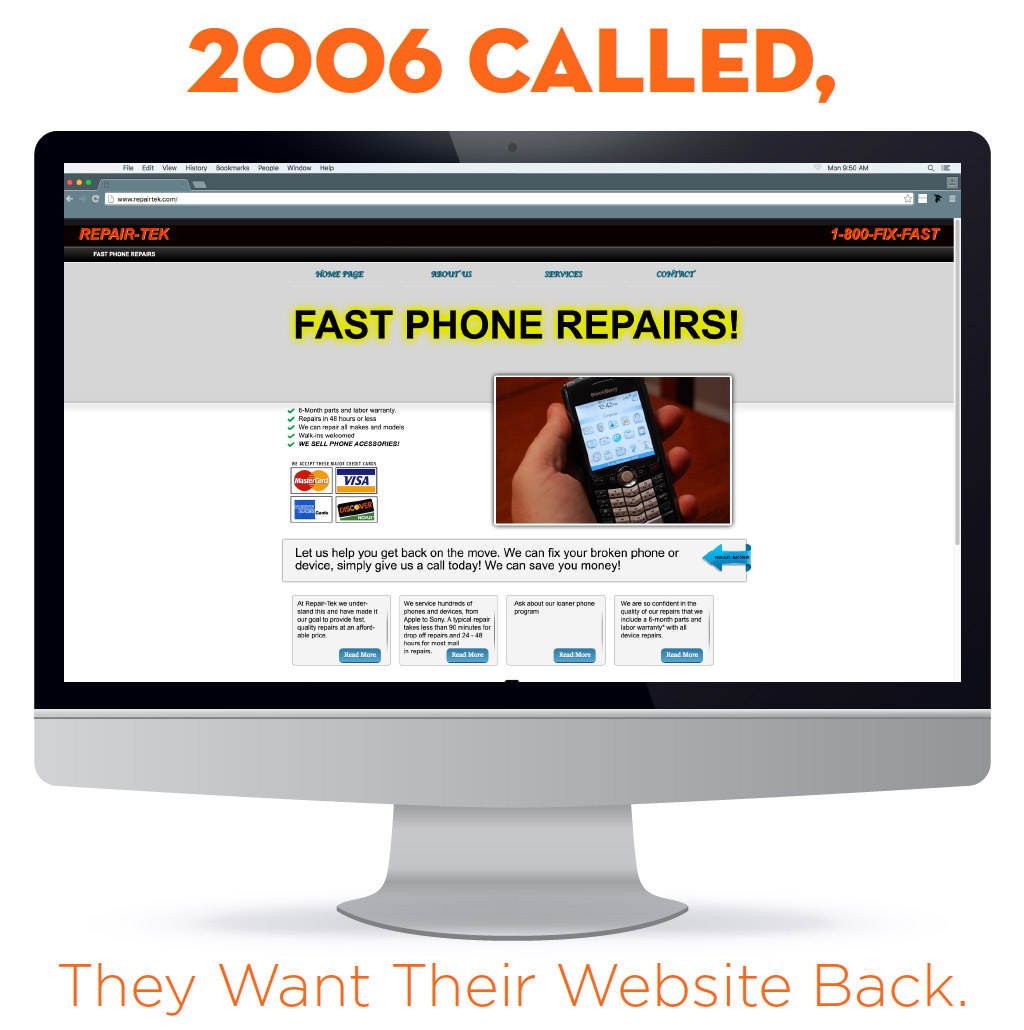
    2006 Called - They want their website back.

    DOES THE WEBSITE HAVE A CLEAR PURPOSE

    Studies have shown that 500 milliseconds (i.e. half a second) is the amount of time needed by a site visitor to be engaged when landing on your page for the first time. That is why it is one should ask, “Does this site pass the blink test?” The blink test determines if a site was created with an eye catching design that communicates its message to customers in a clear and timely manner within the half second rule. It my sound silly but if a visitor is not engaged or the purpose of the sight is not clear, then the visitor is more than likely to leave the site.

    BAD SITE NAVIGATION

    Nothing hampers the user experience more than a poorly designed website. Poorly designed menu system, crowded page layout and poorly defined actionable items.

    Users should not have to toil for the information they came for in the first place.

    Visitors to your site should be presented with an intuitive layout. If your site design is well conceived and provides the user with a good experience, then the user will feel that they are dealing with a reputable business. Steve Krug author of the book “Don’t Make Me Think” states: “I should be able to “get it” – what it is and how to use it – without expending any effort thinking about it.”

    WEBPAGE CLUTTER

    Though it may seem obvious, clutter still happens all too often on websites. This happens when you have too much copy or graphics vying for attention. The end result is usually having the user leaving your site. Strive for a balanced ratio of copy and visual elements.

    MISSING CALLS-TO-ACTION

    Your business site exists for a reason and that is to create customers for you. A mistake that happens often is you have something offered on your site, but the call-to-action for them to take fails to motivate the visitor to click. The lack of a compelling call to action is a sure way to harm the conversion rate of your site. 

     USING FLASH

    It’s a 90s technology that just needs to stay in the 90’s. It’s not compatible with mobile devices and causes problems with web browsers. Websites now use a combination of HTML 5, CCS3 and JavaScript. Those technologies are widely supported on mobile platforms and across many different devices.

    BROKEN LINKS

    Broken links are unacceptable and unprofessional on business websites. This will cause your site not be indexed properly and cause you to loose traffic. It will also frustrate the visitor because it basically sends the user to a dreaded 404 page which the user then has to use the click back button to return the previous page. Broken links also hurt your sites credibility and hurt its SEO page ranking.

     LACK OF SOCIAL MEDIA INTEGRATION

    Social media is an integral part of your online marketing strategy. Social media allows your visitors to engage with your business. Encourage visitors share and publish your content on their social profiles. When visitors create content about your business your also having them create digital word of mouth, which is very valuable to your business. 

    NON RESPONSIVE WEBSITE

    A sure way to shoot your business in the foot in today’s online world is not to have your site be “responsive” in its design. Wikipedia defines Responsive web design as: web design aimed at crafting sites to provide an optimal viewing and interaction experience—easy reading and navigation with a minimum of resizing, panning, and scrolling—across a wide range of devices (from desktop computer monitors to mobile phones).” Mobile traffic is growing more and more every year.

    Over 50% of online traffic now comes from mobile devices. Failure to recognize this feature will put your site at a disadvantage.

    POOR IMAGE QUALITY

    Nobody likes to see low-res jaggy or blurry images. Having sub-par images make your site not only look unprofessional but also hurt your credibility as a business. Quality images are a must for any professional business site. There really isn’t a reason to have bad images on your site when there are many cost effective photo stock sites available online. One needs to make sure that web images load quickly and are optimized for web use. Web graphics should be set to 72dpi and are most likely to be saved in GIF (Graphics Interchange Format), JPEG (Joint Photographic Experts Group) or PNG (Portable Network Graphics) format. GIF format is primarily use for flat colored graphics without graduated colors like photographs. Gifs work better with logos or simple illustrations. Jpegs is used mostly when displaying photographs or other graphics with continuous tones. PNG offer the same GIF capabilities but allow for 24 bit images. You should also resist the urge to put images found using search since you’re the opening yourself to legal copyright infringement issues.

    For more information on how our company can help your business grow please fill out the form below.

  • Is Your Brand in Need of a Freshening Up?

    Is Your Brand in Need of a Freshening Up?

    Your Brand - Brand Refresh

    Your brand is one of the most defining aspects of your company. A strong brand establishes your business identity, highlights your values, and distinguishes you from the competition. Although your brand includes your logo, it goes far beyond this single image and encompasses your packaging, product design, marketing collateral, and voice. A good brand forms a positive emotional connection with the customer.

    If your brand isn’t getting the reaction that you want, it’s time to take a closer look at how your customers perceive your company. You may find that it’s time for a light refresh or even a complete redesign. Updating your brand can transform the way your clients perceive you.

    Refreshing Your Brand

    A brand refresh is a gentle update that will give your brand a new look and feel while retaining its core elements. You’d typically keep much of your signature logo while adding small stylistic changes. Perhaps you’ll go for a more neutral color palette, or shift from a classic design to something more modern. You might adjust your messaging to try new key phrases, and update your voice for a tone that connects better to your target audience.

    A brand refresh will help focus your message and revitalize your image. It can also help you adjust your approach to align better with market conditions, or draw in a demographic that you’re not connecting with. Enduring brands like Coca-Cola are masters of the subtle refresh that retains all the beloved familiarity of a valuable brand while featuring sleek updates that keep things current.

    You should consider refreshing your brand if:

    • Your brand is older and you feel it needs updating for a more modern audience
    • Market conditions have changed in some significant way
    • Your products or services no longer align with your brand

    Just remember that it’s best to avoid going overboard with current trends that may change in a heartbeat. It’s very likely that you still have valuable brand equities at your disposal. The key here is to build on those equities with the goal of creating something that truly will connect with your target consumer.

    Below is an example of a brand refresh we did for a client’s direct mail campaign recently. You’ll see that the brand’s core features have been retained, while the design itself has been given a sleek, modern aesthetic:

    Redesigning or Rebranding

    A brand redesign, or rebrand, is more involved than a refresh. This involves a complete overhaul of your brand’s image. Rebranding is a very involved process, so you want to consider your needs carefully before you invest in a complete redesign.

    Redesign your brand if you feel it’s ineffective, or you’re targeting a drastically different audience. You may also benefit from rebranding if you’re making major changes to the core purpose and values of your business, or you’re approaching a merger. Consider redesigning/rebranding if:

    • Your brand is creating a strong negative response with your target audience
    • The market you’re targeting has changed fundamentally
    • You now have a completely different business model or product than when the brand was originally designed
    • A major PR disaster has occurred and your company needs to distance itself from the old brand

    If you rebrand well, you can distance your business from negative publicity and create fresh new associations for your audience. You can reestablish yourself after a major setback or send a bold new message about the ways you’re fundamentally changing your company.

    Unfortunately, though, rebranding comes with some risks. You may alienate or confuse your loyal customers. If your rebranding goes awry, as it did for Kraft Foods, you could go so far as to upset your buyers and generate public outcry.

    Doing it Right (with Some Expert Assistance)

    Expert advice and assistance are key when you’re refreshing or redesigning your brand. The idea is to give your business a fresh and consistent look and feel, and there’s no better way to do that than to bring in new eyes. With an experienced creative team on your side, you can identify and execute the best possible approach for your company, whether it’s a small facelift or a total overhaul of your brand.

    At Figment, our creative team is experienced both in brand refreshes and in complete brand redesigns. We’ll provide expert insight if you’re unsure of whether your brand needs a facelift or a complete overhaul.

  • Don't Let Your Creativity Die

    Don't Let Your Creativity Die

    Group Brainstorming

    Technology has brought out different qualities in people. For the advertising industry, it has provided the potential for great, revolutionary creativity. However, technology will not live up to its potential until it is thought of less like televisions and more like paintbrushes.

    Designers see computer screens not simply as information machines, but also as a new medium for innovative design and expression. The more we learn about our technological abilities, the more imaginative we become.

    Every person is neurologically capable of creativity; but only some keep this creativity active while others unconsciously keep it dormant. In this modern era of technology, it is just as easy to turn off the brain and absorb the entertaining value of technology rather than utilize it toward building our artistic imagination.

    Here are a few tips toward keeping creative juices flowing:

    1. Collect things that inspire you.
      Sometimes you’re in a rut. Whether it is in the middle of the creative process or just a bad day at work, a collection of different things can bring out a positive and creative disposition in you. If you aren’t a hoarder, then the Internet is a place of limitless exploration and can bring your inspiration.
    1. Never stop brainstorming.
      It always helps to pick up some relevant reading material or watch some tutorials online. By conducting research and putting your mind to work, you increase your own capabilities and knowledge. Sometimes by brainstorming ideas for other projects, you can reach a breakthrough for the one giving you trouble.
    1. Brainstorm in groups.
      Creative people need peers to bounce their ideas off of. By supporting those around you, you create positive synergy with people who have similar goals and issues. With this fresh energy, you will emerge inspired and someone will probably give you a great creative solution that keeps your spark going.
    1. Create in another discipline.
      Switch it up! Try a new outlet for self-expression and experimentation. To stay creative, you must awaken different parts of your brain. Balance some mental projects (writing) with hands-on (crafting). When new neural connections are formed, you have more material for your subconscious to access when you’re trying to find your creativity.
    1. Remember that creativity cannot be forced.
      Accept that moments of non-productivity will happen. Creativity requires a period of gestation; allow your ideas to brew and take form with time. Imagine. Dream. Aspire. These are the ingredients to manifest your inner creativity.


  • Why Can’t I Find Myself On Google?

    Why Can’t I Find Myself On Google?

    Lost-in-web

    Your company has just started its first paid search or SEO campaign, and you can’t wait to see results. You may feel the impulse to start Googling brand terms and other keywords to ensure your ads are serving and the copy looks correct. Or maybe you’ll scroll down past the ads to see how your site is ranking in organic search.

    We see this happen all the time, but it’s actually a bad idea to search for yourself to verify your PPC and SEO campaigns. Of all the tools on the Internet, personal search results are perhaps the least reliable performance metrics. In fact, performing these searches actually can do more harm than good. Read on to learn more about why searching for yourself online isn’t a productive way to measure your Internet marketing campaigns.

    How Searching for Yourself Damages Your Business

    At the very least, searching for your ads and clicking through to check the landing page costs money. If you check your ads and the extensions daily on Google and Bing, then you could be wasting more than $500 a year.

    Except for a few brand terms, most of your keywords and campaigns will have an impression share below 100%. This means your ads aren’t showing all of the time due to budget and bidding factors. If you’re constantly searching for your ads, then you’re taking away the opportunity for a customer who actually wants to buy your product to see your branding.

    For both PPC and SEO, these searches hyper-inflate demand for certain terms. While larger businesses won’t have to worry about a few clicks increasing their demand, this is a real problem for companies that only get a few hundred clicks a day.

    Why Your Personal Search Results are Irrelevant

    Most likely, you won’t find any results if you search for yourself or keywords that you feel you should be ranking for. And even if searching for yourself yields amazing results in first position on your computer, it could mean nothing to everyone else — including people in the same geographic location.

    Google is in the business of learning what people want and serving it up on the first try. If the Google algorithm knows that you’re interested in ads or results about your business based on your search history, then Google will show them to you. The search engine doesn’t connect the dots that you work for the company; it just focuses on the demand and CTR.

    Even if you search for your terms without clicking on them, you could be skewing your results in the future. Google will eventually stop serving ads altogether, and assume that you’re the type of user who avoids ads. In this case, your ads are still showing, just not to you — and that’s a direct result of all that self-Googling behavior.

    Finally, searching in incognito won’t make your results any more accurate. Even though Google doesn’t store the search data, the sites you visit are able to.

    You Think Differently than Your Customers

    Just because you optimize for a keyword or bid it to first position doesn’t mean those are the results that you’re showing for. On the PPC side, your match type dictates which searches your ads can be seen. On the SEO side, the odds that people search for your exact keyword before they convert are slim.

    The fact is, your customers don’t think like you do. They make spelling errors and type more naturalistic, query-driven phrases into the search bar. Ultimately, it takes a great deal of experience with paid search and SEO to interpret the data and determine the terms for which your customers are actually searching.

    Unless you know how to properly research keywords based on traffic volume and conversion data, Googling yourself just wastes your time by providing unrealistic results for unrealistic searches.

    3icons

    Valuing the Right Metrics to Achieve Your Business’ Actual Goals

    At the end of the day, Googling yourself and seeing keyword rankings is not the most accurate way to check on the success of a campaign. Agencies that emphasize the importance of finding yourself online usually are optimizing for vanity terms that won’t get any real traffic or generate any actual revenue.

    By contrast, Figments’s main success metric is the number of unique leads being driven to clients. Our Internet marketing campaigns are optimized so that all elements — whether they’re organic or paid search — are coordinated to achieve this end goal. Find out how we can get started doing this for your business today.

    For more information about SEO or how our company can help your business grow please fill out the form below.