Category: Latest News

  • Leveraging Community Involvement into Online Success

    Leveraging Community Involvement into Online Success

    Leveraging Community Involvement into Online Success

    Online success and dominant organic visibility don’t occur overnight. With limited online real estate available, Google and other search engines reward the sites they believe will provide the most value to online searchers.

    Improving a site’s online visibility the right way — which is to say, by not cheating — takes a significant investment of time and sustained energy. Through online marketing programs, Figment Design will optimize your website, strategy, and online marketing channels to produce the best ROI.

    However, we have found that the more active companies are in their local communities, the more likely they are to achieve their internet marketing goals. This is because Google’s algorithm takes a number of factors into consideration, both online and offline, when deciding how to serve up search results.

    Relevance, Distance, and Prominence

    For service-area-based businesses, including those in the home services verticals, Google uses three main factors to determine if a site should be displayed to a searcher:

    Relevance

    This factor refers to how well your local business listing matches the intent of what someone is searching for. For example, Google is more likely to display a company listed in the service category “air conditioning repair service” for a searcher looking for keywords related to air conditioning repair. The reality with relevance is that all competitors in a vertical essentially tend to be categorized properly, which makes it very difficult to distinguish your company from your competitors.

    Distance

    Distance is the second factor Google uses for local search. While the closest company to a searcher’s location does not always show up first — other factors such as the strength of the site are used to determine which sites are listed — the reality is that companies located closer to the epicenter of a city tend to have better visibility in the local map section than those on the outskirts of a city or in a neighboring city.

    Prominence

    Of these three main local factors, prominence may be the most important one. It allows companies to distinguish themselves from their competitors based on the amount of awareness being generated about their brand. Prominence is defined by Google as follows:

    “Prominence refers to how well-known a business is. Some places are more prominent in the offline world, and search results try to reflect this in local ranking. For example, famous museums, landmark hotels, or well-known store brands that are familiar to many people are also likely to be prominent in local search results. Prominence is also based on information that Google has about a business from across the web (like links, articles, and directories). Google review count and score are factored into local search ranking: more reviews and positive ratings will probably improve a business’s local ranking.”

    Improving Your Local Prominence

    While you surely have heard about the value of online customer reviews, especially Google reviews, improving your local prominence can be difficult. Time and time again, though, we have seen home services companies increase their prominence through offline activities.

    This is accomplished by building meaningful relationships with other businesses and nonprofit organizations in your local community. Here are just a few of the many relationship-building opportunities that we suggest looking into:

    • Sponsorships (local sports team, community events, etc.)
    • Volunteer Work
    • Business Relationships (local vendors, related businesses)
    • Participation with local Chambers of Commerce

    Community involvement ultimately offers many advantages to your business. Often, it naturally will translate into back links to your site, which in turn, generate additional online visibility, site traffic, and ultimately leads. And as we’ve noted in previously on the Figment Design blog, this is just one of the many ways that community involvement can help improve your brand.

    Putting it All Together

    When online strategies are leveraged in combination with offline relationship-building tactics, the results are profoundly powerful. Consult with a Figment Design strategist today if you would like to learn more about how to leverage available opportunities in your area and/or your competitors’ level of involvement with community events and sponsorships.

    For more information on how our company can help your business grow please fill out the form below.

  • Determining Reach & Frequency

    Determining Reach & Frequency

    Frequency-art

    You want your television and radio advertising campaigns to help increase your client base, boost sales, and strengthen loyalty. However, what metrics are you using to determine when you’re meeting these goals?

    Along with gross rating points (GRP), reach and frequency are some of the most essential numbers to figure out advertising effectiveness. Understanding these metrics will help you achieve your short- and long-term advertising goals.

    Understanding Reach

    Reach is the percentage of targets who are exposed to your media at least once during a predetermined period of time. Your brand needs at least 50 percent reach to survive, but higher reach is always better, particularly at the beginning of a new campaign. The highest reach you can typically achieve is 99 percent.

    To properly determine reach, you need to define who your target audience is. Reach isn’t a percentage of total customers, but rather a percentage of a specified audience. For example, you may want to reach homeowners in a particular metropolitan area or within a certain demographic. You will determine how many people you want to connect to within this audience and calculate the reach of your campaign as a percentage of that.

    Figuring out Frequency

    Frequency is the average number of times a household is exposed to your campaign over a set period of time. It’s found by dividing your campaign’s total GRP by its reach; however, the real trick lies in figuring out your campaign’s optimal frequency to achieve maximum effectiveness. In academic circles, the process for figuring this out is known as “frequency value planning.”

    The lowest average frequency is 2 or 3, while the highest average frequency is 12. While you want to increase frequency beyond a single exposure, customers can experience burnout if the frequency is too high for too long. However, in some cases, a hyper-frequent campaign can be invaluable for drowning out your competition and getting faster recognition from your audience.

    Frequency versus Reach:
    Which Matters Most?

    Both reach and frequency are important to consider throughout the lifecycle of your campaign. But the value you place on these metrics really depends on your goals and the buying cycle for your product.

    Reach should be a high priority with a new campaign. If you’re promoting new products, packaging, or distribution, then reach is where you want to focus. Concentrating on reach is also more effective with a broad demographic.

    Frequency is a more important metric for facing stiff competition in your industry. When you’re struggling to establish yourself as an industry leader with your targeted audience, frequency is your primary focus. Frequency is most important for a narrowly defined audience within a very specific demographic.

    Having a professional media buying team on your side will help you understand the finer points of frequency and reach and target the right numbers for each campaign. Figment Design uses a proven, evidence-based approach to help our clients determine the reach and frequency goals of all their media buys. Our media planning team has the experience to achieve the optimal reach and frequency for your campaigns with as little waste as possible.

    For more information on how our company can help your business grow please fill out the form below.

  • Common Business Website Mistakes

    Common Business Website Mistakes

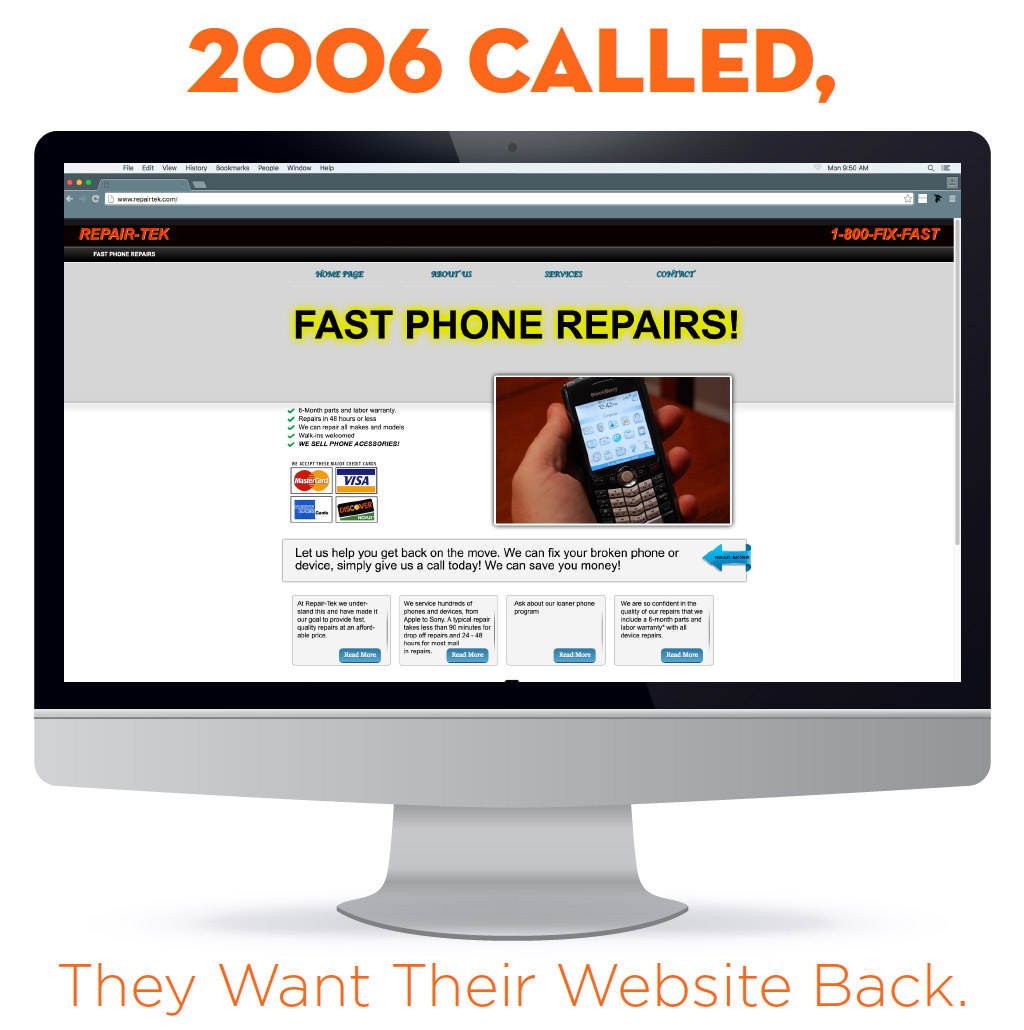
    2006 Called - They want their website back.

    DOES THE WEBSITE HAVE A CLEAR PURPOSE

    Studies have shown that 500 milliseconds (i.e. half a second) is the amount of time needed by a site visitor to be engaged when landing on your page for the first time. That is why it is one should ask, “Does this site pass the blink test?” The blink test determines if a site was created with an eye catching design that communicates its message to customers in a clear and timely manner within the half second rule. It my sound silly but if a visitor is not engaged or the purpose of the sight is not clear, then the visitor is more than likely to leave the site.

    BAD SITE NAVIGATION

    Nothing hampers the user experience more than a poorly designed website. Poorly designed menu system, crowded page layout and poorly defined actionable items.

    Users should not have to toil for the information they came for in the first place.

    Visitors to your site should be presented with an intuitive layout. If your site design is well conceived and provides the user with a good experience, then the user will feel that they are dealing with a reputable business. Steve Krug author of the book “Don’t Make Me Think” states: “I should be able to “get it” – what it is and how to use it – without expending any effort thinking about it.”

    WEBPAGE CLUTTER

    Though it may seem obvious, clutter still happens all too often on websites. This happens when you have too much copy or graphics vying for attention. The end result is usually having the user leaving your site. Strive for a balanced ratio of copy and visual elements.

    MISSING CALLS-TO-ACTION

    Your business site exists for a reason and that is to create customers for you. A mistake that happens often is you have something offered on your site, but the call-to-action for them to take fails to motivate the visitor to click. The lack of a compelling call to action is a sure way to harm the conversion rate of your site. 

     USING FLASH

    It’s a 90s technology that just needs to stay in the 90’s. It’s not compatible with mobile devices and causes problems with web browsers. Websites now use a combination of HTML 5, CCS3 and JavaScript. Those technologies are widely supported on mobile platforms and across many different devices.

    BROKEN LINKS

    Broken links are unacceptable and unprofessional on business websites. This will cause your site not be indexed properly and cause you to loose traffic. It will also frustrate the visitor because it basically sends the user to a dreaded 404 page which the user then has to use the click back button to return the previous page. Broken links also hurt your sites credibility and hurt its SEO page ranking.

     LACK OF SOCIAL MEDIA INTEGRATION

    Social media is an integral part of your online marketing strategy. Social media allows your visitors to engage with your business. Encourage visitors share and publish your content on their social profiles. When visitors create content about your business your also having them create digital word of mouth, which is very valuable to your business. 

    NON RESPONSIVE WEBSITE

    A sure way to shoot your business in the foot in today’s online world is not to have your site be “responsive” in its design. Wikipedia defines Responsive web design as: web design aimed at crafting sites to provide an optimal viewing and interaction experience—easy reading and navigation with a minimum of resizing, panning, and scrolling—across a wide range of devices (from desktop computer monitors to mobile phones).” Mobile traffic is growing more and more every year.

    Over 50% of online traffic now comes from mobile devices. Failure to recognize this feature will put your site at a disadvantage.

    POOR IMAGE QUALITY

    Nobody likes to see low-res jaggy or blurry images. Having sub-par images make your site not only look unprofessional but also hurt your credibility as a business. Quality images are a must for any professional business site. There really isn’t a reason to have bad images on your site when there are many cost effective photo stock sites available online. One needs to make sure that web images load quickly and are optimized for web use. Web graphics should be set to 72dpi and are most likely to be saved in GIF (Graphics Interchange Format), JPEG (Joint Photographic Experts Group) or PNG (Portable Network Graphics) format. GIF format is primarily use for flat colored graphics without graduated colors like photographs. Gifs work better with logos or simple illustrations. Jpegs is used mostly when displaying photographs or other graphics with continuous tones. PNG offer the same GIF capabilities but allow for 24 bit images. You should also resist the urge to put images found using search since you’re the opening yourself to legal copyright infringement issues.

    For more information on how our company can help your business grow please fill out the form below.

  • Is Your Brand in Need of a Freshening Up?

    Is Your Brand in Need of a Freshening Up?

    Your Brand - Brand Refresh

    Your brand is one of the most defining aspects of your company. A strong brand establishes your business identity, highlights your values, and distinguishes you from the competition. Although your brand includes your logo, it goes far beyond this single image and encompasses your packaging, product design, marketing collateral, and voice. A good brand forms a positive emotional connection with the customer.

    If your brand isn’t getting the reaction that you want, it’s time to take a closer look at how your customers perceive your company. You may find that it’s time for a light refresh or even a complete redesign. Updating your brand can transform the way your clients perceive you.

    Refreshing Your Brand

    A brand refresh is a gentle update that will give your brand a new look and feel while retaining its core elements. You’d typically keep much of your signature logo while adding small stylistic changes. Perhaps you’ll go for a more neutral color palette, or shift from a classic design to something more modern. You might adjust your messaging to try new key phrases, and update your voice for a tone that connects better to your target audience.

    A brand refresh will help focus your message and revitalize your image. It can also help you adjust your approach to align better with market conditions, or draw in a demographic that you’re not connecting with. Enduring brands like Coca-Cola are masters of the subtle refresh that retains all the beloved familiarity of a valuable brand while featuring sleek updates that keep things current.

    You should consider refreshing your brand if:

    • Your brand is older and you feel it needs updating for a more modern audience
    • Market conditions have changed in some significant way
    • Your products or services no longer align with your brand

    Just remember that it’s best to avoid going overboard with current trends that may change in a heartbeat. It’s very likely that you still have valuable brand equities at your disposal. The key here is to build on those equities with the goal of creating something that truly will connect with your target consumer.

    Below is an example of a brand refresh we did for a client’s direct mail campaign recently. You’ll see that the brand’s core features have been retained, while the design itself has been given a sleek, modern aesthetic:

    Redesigning or Rebranding

    A brand redesign, or rebrand, is more involved than a refresh. This involves a complete overhaul of your brand’s image. Rebranding is a very involved process, so you want to consider your needs carefully before you invest in a complete redesign.

    Redesign your brand if you feel it’s ineffective, or you’re targeting a drastically different audience. You may also benefit from rebranding if you’re making major changes to the core purpose and values of your business, or you’re approaching a merger. Consider redesigning/rebranding if:

    • Your brand is creating a strong negative response with your target audience
    • The market you’re targeting has changed fundamentally
    • You now have a completely different business model or product than when the brand was originally designed
    • A major PR disaster has occurred and your company needs to distance itself from the old brand

    If you rebrand well, you can distance your business from negative publicity and create fresh new associations for your audience. You can reestablish yourself after a major setback or send a bold new message about the ways you’re fundamentally changing your company.

    Unfortunately, though, rebranding comes with some risks. You may alienate or confuse your loyal customers. If your rebranding goes awry, as it did for Kraft Foods, you could go so far as to upset your buyers and generate public outcry.

    Doing it Right (with Some Expert Assistance)

    Expert advice and assistance are key when you’re refreshing or redesigning your brand. The idea is to give your business a fresh and consistent look and feel, and there’s no better way to do that than to bring in new eyes. With an experienced creative team on your side, you can identify and execute the best possible approach for your company, whether it’s a small facelift or a total overhaul of your brand.

    At Figment, our creative team is experienced both in brand refreshes and in complete brand redesigns. We’ll provide expert insight if you’re unsure of whether your brand needs a facelift or a complete overhaul.

  • Don't Let Your Creativity Die

    Don't Let Your Creativity Die

    Group Brainstorming

    Technology has brought out different qualities in people. For the advertising industry, it has provided the potential for great, revolutionary creativity. However, technology will not live up to its potential until it is thought of less like televisions and more like paintbrushes.

    Designers see computer screens not simply as information machines, but also as a new medium for innovative design and expression. The more we learn about our technological abilities, the more imaginative we become.

    Every person is neurologically capable of creativity; but only some keep this creativity active while others unconsciously keep it dormant. In this modern era of technology, it is just as easy to turn off the brain and absorb the entertaining value of technology rather than utilize it toward building our artistic imagination.

    Here are a few tips toward keeping creative juices flowing:

    1. Collect things that inspire you.
      Sometimes you’re in a rut. Whether it is in the middle of the creative process or just a bad day at work, a collection of different things can bring out a positive and creative disposition in you. If you aren’t a hoarder, then the Internet is a place of limitless exploration and can bring your inspiration.
    1. Never stop brainstorming.
      It always helps to pick up some relevant reading material or watch some tutorials online. By conducting research and putting your mind to work, you increase your own capabilities and knowledge. Sometimes by brainstorming ideas for other projects, you can reach a breakthrough for the one giving you trouble.
    1. Brainstorm in groups.
      Creative people need peers to bounce their ideas off of. By supporting those around you, you create positive synergy with people who have similar goals and issues. With this fresh energy, you will emerge inspired and someone will probably give you a great creative solution that keeps your spark going.
    1. Create in another discipline.
      Switch it up! Try a new outlet for self-expression and experimentation. To stay creative, you must awaken different parts of your brain. Balance some mental projects (writing) with hands-on (crafting). When new neural connections are formed, you have more material for your subconscious to access when you’re trying to find your creativity.
    1. Remember that creativity cannot be forced.
      Accept that moments of non-productivity will happen. Creativity requires a period of gestation; allow your ideas to brew and take form with time. Imagine. Dream. Aspire. These are the ingredients to manifest your inner creativity.


  • Why Can’t I Find Myself On Google?

    Why Can’t I Find Myself On Google?

    Lost-in-web

    Your company has just started its first paid search or SEO campaign, and you can’t wait to see results. You may feel the impulse to start Googling brand terms and other keywords to ensure your ads are serving and the copy looks correct. Or maybe you’ll scroll down past the ads to see how your site is ranking in organic search.

    We see this happen all the time, but it’s actually a bad idea to search for yourself to verify your PPC and SEO campaigns. Of all the tools on the Internet, personal search results are perhaps the least reliable performance metrics. In fact, performing these searches actually can do more harm than good. Read on to learn more about why searching for yourself online isn’t a productive way to measure your Internet marketing campaigns.

    How Searching for Yourself Damages Your Business

    At the very least, searching for your ads and clicking through to check the landing page costs money. If you check your ads and the extensions daily on Google and Bing, then you could be wasting more than $500 a year.

    Except for a few brand terms, most of your keywords and campaigns will have an impression share below 100%. This means your ads aren’t showing all of the time due to budget and bidding factors. If you’re constantly searching for your ads, then you’re taking away the opportunity for a customer who actually wants to buy your product to see your branding.

    For both PPC and SEO, these searches hyper-inflate demand for certain terms. While larger businesses won’t have to worry about a few clicks increasing their demand, this is a real problem for companies that only get a few hundred clicks a day.

    Why Your Personal Search Results are Irrelevant

    Most likely, you won’t find any results if you search for yourself or keywords that you feel you should be ranking for. And even if searching for yourself yields amazing results in first position on your computer, it could mean nothing to everyone else — including people in the same geographic location.

    Google is in the business of learning what people want and serving it up on the first try. If the Google algorithm knows that you’re interested in ads or results about your business based on your search history, then Google will show them to you. The search engine doesn’t connect the dots that you work for the company; it just focuses on the demand and CTR.

    Even if you search for your terms without clicking on them, you could be skewing your results in the future. Google will eventually stop serving ads altogether, and assume that you’re the type of user who avoids ads. In this case, your ads are still showing, just not to you — and that’s a direct result of all that self-Googling behavior.

    Finally, searching in incognito won’t make your results any more accurate. Even though Google doesn’t store the search data, the sites you visit are able to.

    You Think Differently than Your Customers

    Just because you optimize for a keyword or bid it to first position doesn’t mean those are the results that you’re showing for. On the PPC side, your match type dictates which searches your ads can be seen. On the SEO side, the odds that people search for your exact keyword before they convert are slim.

    The fact is, your customers don’t think like you do. They make spelling errors and type more naturalistic, query-driven phrases into the search bar. Ultimately, it takes a great deal of experience with paid search and SEO to interpret the data and determine the terms for which your customers are actually searching.

    Unless you know how to properly research keywords based on traffic volume and conversion data, Googling yourself just wastes your time by providing unrealistic results for unrealistic searches.

    3icons

    Valuing the Right Metrics to Achieve Your Business’ Actual Goals

    At the end of the day, Googling yourself and seeing keyword rankings is not the most accurate way to check on the success of a campaign. Agencies that emphasize the importance of finding yourself online usually are optimizing for vanity terms that won’t get any real traffic or generate any actual revenue.

    By contrast, Figments’s main success metric is the number of unique leads being driven to clients. Our Internet marketing campaigns are optimized so that all elements — whether they’re organic or paid search — are coordinated to achieve this end goal. Find out how we can get started doing this for your business today.

    For more information about SEO or how our company can help your business grow please fill out the form below.

  • Branding and Consistency: Is It Really That Important?

    Branding and Consistency: Is It Really That Important?

    It’s amazing how many times we are asked to bend the rules of a brand guideline. It often makes me think, do people really understand how important these rules are? For example, most brand guidelines cost companies large amounts of money in research, creative, and production. It’s not like you can just throw your logo in the oven and out pops a great guideline that tastes great.

    Most of the time, and hopefully, the agency put in the time and research to justify the suggestions made in the guidelines, not to mention the cost. Why do they spend so much time, and is it really worth it? Regardless of size, industry, or target market, you need a brand as strong as your foundation. The brand is usually your company’s first impression, and will be the lasting impression.

    What Is My Brand?

    Well, I’m about to open the floodgates of discussion, but your brand is NOT the same as your logo. In a nutshell: It’s your elevator pitch, your employee training, what you show the consumer, it is the ESSENCE of what makes your company…Your Company.

    How Is My Logo NOT My Brand?

    Think of it as a complete suit.
    Your tie is your logo, and usually the first thing someone sees.
    Then they see your jacket, which could be a magazine ad.
    Even deeper they see your shirt color, this would be your message and your copy.
    Oh look, nice matching pants, which should be a nicely branded website.
    And the shoes, that’s your e-blast and digital ads.

    This is just an example, but not one single piece makes the outfit; it takes all of them to complement each other. And what happens if your shoes don’t match? It ruins everything. Your brand is very similar; it is all the pieces that make your brand work, and each piece is very important for its purpose. Put the wrong piece in the wrong place, and you may end up with a disaster. There’s nothing like going to a client meeting dressed like a clown, and there’s nothing like having a confused brand.

    Do I Need to Adjust My Branding for the Audience?

    Even as an agency, we can admit it, you’re in a give-and-take relationship with your brand. Sometimes, your brand doesn’t work for the media you want to advertise in… WHY?
    You first have to ask yourself: does it not work because I’m trying to advertise in the wrong place? Am I placing my ad here because I just want to see it there? Is this really my clientele?

    You may be surprised by your own answer. If you put your time and effort into building your brand, finding out who your client really is, then the brand should fit anywhere that your target audience is viewing it and drive business through those channels.

    Exceptions: Yes, there are a few. When it’s Christmas season, go ahead and put snow on top of your logo, and use red all over. During St. Patrick’s Day, go ahead and make a cool logo in green with a leprechaun holding it up. Of course there are exceptions… as long as they don’t become one of the rules.

    What’s the Value of a Clearly Defined Brand?

    The Disney brand is one of the most recognizable in the world, along with Coke, Apple, McDonalds, and a few others that are instantly recognized. Their brand defines every single aspect of the company as a reflection of their vision. Once again, we go back to the brand being the essence of who you are and not just your logo. If you look at the Apple logo, you would think they are fruit vendors; McDonalds’ arches don’t really tell you anything; so on and so forth. It is the complete package that defines them; because of their branding efforts, when you see an apple, you think technology. When you see yellow arches, you think french fries.

    You don’t have to be a giant in the industry to have strong brand. Many small businesses use their family name or something representing their business as their logo. But the message you build around it is what really matters. When potential customers connect with the brand, begin to recognize it, what it’s about, and what it stands for; this is when you have a true brand.

    How Do I Develop My Brand?

    You have to start on the inside! What that means is you have to look at your core values and what makes you unique and different from the competition. Be honest with yourself. Do you offer better quality? Are you faster? Find the top traits that make you the best in the business, then start crafting your external message.

    Don’t cheat. Say what you really are, and if you can’t build a brand you believe in, then you need to make some adjustments from the inside out. Once you have the belief in yourself and your business, your brand will come along just fine.

    It won’t happen overnight. There are so many things involved when you build your brand, such as color, font style, bold or thin, flowing design or corporate, what photos should be used, how much copy is enough… it goes on and on.

    At Figment Design, we take pride in creating brands that are recognized and can stand on their own. Make sure you take the time to get your brand right, because once you decide on it, it should last you a very long time.

    What Does My Brand Do For Me?

    Over time, your brand should help define you and make you recognizable to your clients. When you feel like your brand is not working for you anymore, it’s time to look at it from a fresh perspective. Then you can decide if the model has changed and you need to refresh the brand, or if you have moved in a completely different direction, you can decide to create a totally new brand.

    What your brand should build for you is:

    • Trust: Does my brand deliver on who we are and what we do?
    • Recognition: When someone sees my brand do they know what we do?
    • Uniqueness: Does my brand stand out over the competition or does it get lost?
    • Clarity: What would a first time viewer think I do when looking at my brand?

    Remember, if you stay true to your brand, it should work to build a loyal base and help recruit potential customers.

    How Often Should I Adjust My Brand?

    Every month. This way, agencies can get rich and make up for the clients that are too cheap to spend the time and money. “Did I just type that out loud?”

    Seriously, your brand should be touched as little as possible, but here are some reasons you should refresh your brand or completely rebrand altogether.

    Change in Business Model: Some businesses change along the way. If you are a plumbing business and you decide you are going to start serving HVAC, electrical, and other home services… maybe the logo with the plunger isn’t your best representation.

    Business Take Over: If you are taking over an existing business that may have great resources and opportunities, but not a great reputation, it’s definitely a good time to rebrand.

    Change in Clientele: If you’re an Adults-Only hotel and business drops because the destination has shifted to being family-oriented, maybe it’s time to refocus and rebrand.

    As Time Passes: Some people say you should refresh your brand every 3-5 years. I don’t think that time has anything to do with it. I believe your business has everything to do with it.

    If you have been consistent with business for 10 years and things are still going good, I would probably recommend you make some changes just to make sure your logo fits in the same decade. But if that same business feels a steady drop, I would first check my business to make sure it’s still living up to the brand. If it is, then it might be time to refresh.

    When You Feel Like It: Sometimes you just get a feeling that you aren’t branded like you should be, or you feel like you need a fresh start. This often happens when you feel like you’ve been run over the coals and you think a fresh start will do you good. We love to make our clients happy; can you imagine the smile we put back on their faces when we tell them what they have is great—it just needs a new look. Sometimes, you just need fresh eyes to look at what you have and present it in a different way. This tends to be the case more often than you think.

    The Importance of Consistency

    The key to executing your brand with consistency is to keep the message clear—if you put all of your marketing materials out on a conference table, could someone tell you all about your company in just a couple of sentences? Can you tell that the creative, content, and messaging was created by the same source?

    Brand consistency begins by developing a style the sets the rules for your tagline, mission statement, logo usage, fonts to use, color breakdowns, etc. All of these choices are made for a reason; it reflects key characteristics of your brand. The color of the blue could be the difference between the Caribbean and the Pacific, the font style being bold or script could be the difference between a loud, fun place and an elegant, laidback place. It all fits into the grand scheme of things and makes your brand what it is.

    Once you establish the rules for using your brand, make sure anyone who works with your brand, from vendors to staff, understand the importance and are issued a Brand Guideline so that all of your team members become brand police for you. And if things do get updated, it’s ok, just make sure it gets out to everyone so they are all on the same playing field.

    Transform Your Brand into a Living Entity

    Remember, your brand is a living entity in your company. Even the best marketing materials can’t make up for products, services, or employees that aren’t aligned with your branding. Your brand should start from within and work its way outward if you want customers to believe your message.

    If you are thinking of rebranding or refreshing your brand, you have to be ready to go back to the beginning and ask those hard questions again. Are we still providing what we promise and giving our customers what they deserve? If not, you need to start with reorganizing your business model, and then move to the brand. If you end up rebranding and your services are bad, you will only taint the new brand, so get things in order first.

    Are you struggling with defining your brand and keeping it consistent? Figment Design has the expertise to help define who you are, interpret that into a message, and DRESS it up like new suit. Not sure if your business meets the criteria of your brand? Professionals at Figment Design can give your business a “check-up” from an outside perspective and compare it to your goals and what you want your brand to be.

    Because our agency is full-service, we can coordinate all elements of your online and offline presence to achieve maximum consistency.

  • Stuck In The Office For St. Patrick’s Day?

    Stuck In The Office For St. Patrick’s Day?

    Figment Design - Powered by Imagination
    Stuck In The Office For St. Patrick's Day?
    15% with Promo Code
    No matter the industry you work in, the Irish and non-Irishmen alike will be celebrating St. Patrick’s Day on March 17th. This year, the holiday falls on a Thursday. So unless you plan on calling in sick, chances are that you will be celebrating with your co-workers.

    But don’t take off your green shirts just yet. It’s easy to celebrate the holidaay, even if you’re in a cubicle. Figment Design can help your St. Patrick’s Day come to life.

    Whether it be matching company shirts or novelty items, promotional products can come in handy–especially for boosting company morale. Use the code below to redeem 15% off your first promo item!

    Call 305.593.7488
    Reach New Heights
    Figment Design
    Follow Us
    Facebook Twitter YouTube Pinterest Instagram
  • Augmented Reality in Marketing

    Augmented Reality in Marketing

    Bring everyday objects to life

    aug·men·ted re·al·i·ty

    An enhanced version of reality created by the use of technology to overlay digital information on an image of something being viewed through a device (as a smartphone camera); also : the technology used to create augmented reality.

    before-after

    Connect digital content with the real world using an augmented reality app. Scan print materials enhanced to view rich digital experiences right on top! Then be amazed as extra digital content appears, allowing you to interact with your world in a whole new way!

    qr-ar

    Download app and try it with the two samples below.

    an-play apple-store

    Sample 1

    FD_Services


    Sample 2

    VIDEODISPLAY

  • An Understanding & Introduction to Style Sheets (CSS)

    An Understanding & Introduction to Style Sheets (CSS)

    17561035531_d7ef652048_z

    Introduction to style sheets

    Style sheets represent a major breakthrough for Web page designers, expanding their ability to improve the appearance of their pages. In the scientific environments in which the Web was conceived, people are more concerned with the content of their documents than the presentation. As people from wider walks of life discovered the Web, the limitations of HTML became a source of continuing frustration and authors were forced to sidestep HTML’s stylistic limitations. While the intentions have been good — to improve the presentation of Web pages — the techniques for doing so have had unfortunate side effects. These techniques work for some of the people, some of the time, but not for all of the people, all of the time. They include:

    • Using proprietary HTML extensions
    • Converting text into images
    • Using images for white space control
    • Use of tables for page layout
    • Writing a program instead of using HTML

    These techniques considerably increase the complexity of Web pages, offer limited flexibility, suffer from interoperability problems, and create hardships for people with disabilities.

    Style sheets solve these problems at the same time they supersede the limited range of presentation mechanisms in HTML. Style sheets make it easy to specify the amount of white space between text lines, the amount lines are indented, the colors used for the text and the backgrounds, the font size and style, and a host of other details.

    For example, the following short CSS style sheet (stored in the file “special.css”), sets the text color of a paragraph to green and surrounds it with a solid red border:

    P.special {
    color : green;
    border: solid red;
    }

    Authors may link this style sheet to their source HTML document with the LINK element:

    <!DOCTYPE HTML PUBLIC "-//W3C//DTD HTML 4.01//EN"
       "http://www.w3.org/TR/html4/strict.dtd">
    <HTML>
      <HEAD>
        <LINK href="special.css" rel="stylesheet" type="text/css">
      </HEAD>
      <BODY>
        <P>This paragraph should have special green text.
      </BODY>
    </HTML>

    HTML 4 provides support for the following style sheet features:

    Flexible placement of style information
    Placing style sheets in separate files makes them easy to reuse. Sometimes it’s useful to include rendering instructions within the document to which they apply, either grouped at the start of the document, or in attributes of the elements throughout the body of the document. To make it easier to manage style on a site basis, this specification describes how to use HTTP headers to set the style sheets to be applied to a document.
    Independence from specific style sheet languages
    This specification doesn’t tie HTML to any particular style sheet language. This allows for a range of such languages to be used, for instance simple ones for the majority of users and much more complex ones for the minority of users with highly specialized needs. The examples included below all use the CSS (Cascading Style Sheets) language [CSS1], but other style sheet languages would be possible.
    Cascading
    This is the capability provided by some style sheet languages such as CSS to allow style information from several sources to be blended together. These could be, for instance, corporate style guidelines, styles common to a group of documents, and styles specific to a single document. By storing these separately, style sheets can be reused, simplifying authoring and making more effective use of network caching. The cascade defines an ordered sequence of style sheets where rules in later sheets have greater precedence than earlier ones. Not all style sheet languages support cascading.
    Media dependencies
    HTML allows authors to specify documents in a media-independent way. This allows users to access Web pages using a wide variety of devices and media, e.g., graphical displays for computers running Windows, Macintosh OS, and X11, devices for television sets, specially adapted phones and PDA-based portable devices, speech-based browsers, and braille-based tactile devices.Style sheets, by contrast, apply to specific media or media groups. A style sheet intended for screen use may be applicable when printing, but is of little use for speech-based browsers. This specification allows you to define the broad categories of media a given style sheet is applicable to. This allows user agents to avoid retrieving inappropriate style sheets. Style sheet languages may include features for describing media dependencies within the same style sheet.
    Alternate styles
    Authors may wish to offer readers several ways to view a document. For instance, a style sheet for rendering compact documents with small fonts, or one that specifies larger fonts for increased legibility. This specification allows authors to specify a preferred style sheet as well as alternates that target specific users or media. User agents should give users the opportunity to select from among alternate style sheets or to switch off style sheets altogether.
    Performance concerns
    Some people have voiced concerns over performance issues for style sheets. For instance, retrieving an external style sheet may delay the full presentation for the user. A similar situation arises if the document head includes a lengthy set of style rules.The current proposal addresses these issues by allowing authors to include rendering instructions within each HTML element. The rendering information is then always available by the time the user agent wants to render each element.In many cases, authors will take advantage of a common style sheet for a group of documents. In this case, distributing style rules throughout the document will actually lead to worse performance than using a linked style sheet, since for most documents, the style sheet will already be present in the local cache. The public availability of good style sheets will encourage this effect.

    14.2 Adding style to HTML

    Note. The sample default style sheet for HTML 4 that is included in [CSS2] expresses generally accepted default style information for each element. Authors and implementors alike might find this a useful resource.

    HTML documents may contain style sheet rules directly in them or they may import style sheets.

    Any style sheet language may be used with HTML. A simple style sheet language may suffice for the needs of most users, but other languages may be more suited to highly specialized needs. This specification uses the style language “Cascading Style Sheets” ([CSS1]), abbreviated CSS, for examples.

    The syntax of style data depends on the style sheet language.

    14.2.1 Setting the default style sheet language

    Authors must specify the style sheet language of style information associated with an HTML document.

    Authors should use the META element to set the default style sheet language for a document. For example, to set the default to CSS, authors should put the following declaration in the HEAD of their documents:

    <META http-equiv="Content-Style-Type" content="text/css">

    The default style sheet language may also be set with HTTP headers. The above META declaration is equivalent to the HTTP header:

    Content-Style-Type: text/css

    User agents should determine the default style sheet language for a document according to the following steps (highest to lowest priority):

    1. If any META declarations specify the “Content-Style-Type”, the last one in the character stream determines the default style sheet language.
    2. Otherwise, if any HTTP headers specify the “Content-Style-Type”, the last one in the character stream determines the default style sheet language.
    3. Otherwise, the default style sheet language is “text/css”.

    Documents that include elements that set the style attribute but which don’t define a default style sheet language are incorrect. Authoring tools should generate default style sheet language information (typically a META declaration) so that user agents do not have to rely on a default of “text/css”.

    14.2.2 Inline style information

    Attribute definitions

    style = style [CN]
    This attribute specifies style information for the current element.

    The syntax of the value of the style attribute is determined by the default style sheet language. For example, for [[CSS2]] inline style, use the declaration block syntax described in section 4.1.8 (without curly brace delimiters).

    This CSS example sets color and font size information for the text in a specific paragraph.

    <P style="font-size: 12pt; color: fuchsia">Aren't style sheets wonderful?

    In CSS, property declarations have the form “name : value” and are separated by a semi-colon.

    To specify style information for more than one element, authors should use the STYLE element. For optimal flexibility, authors should define styles in external style sheets.

    14.2.3 Header style information: the STYLE element

    <!ELEMENT STYLE - - %StyleSheet        -- style info -->
    <!ATTLIST STYLE
      %i18n;                               -- lang, dir, for use with title --
      type        %ContentType;  #REQUIRED -- content type of style language --
      media       %MediaDesc;    #IMPLIED  -- designed for use with these media --
      title       %Text;         #IMPLIED  -- advisory title --
      >

    Start tag: required, End tag: required

    Attribute definitions

    type = content-type [CI]
    This attribute specifies the style sheet language of the element’s contents and overrides the default style sheet language. The style sheet language is specified as a content type (e.g., “text/css”). Authors must supply a value for this attribute; there is no default value for this attribute.
    media = media-descriptors [CI]
    This attribute specifies the intended destination medium for style information. It may be a single media descriptor or a comma-separated list. The default value for this attribute is “screen”.

    Attributes defined elsewhere

    The STYLE element allows authors to put style sheet rules in the head of the document. HTML permits any number of STYLE elements in the HEAD section of a document.

    User agents that don’t support style sheets, or don’t support the specific style sheet language used by a STYLE element, must hide the contents of the STYLE element. It is an error to render the content as part of the document’s text. Some style sheet languages support syntax for hiding the content from non-conforming user agents.

    The syntax of style data depends on the style sheet language.

    Some style sheet implementations may allow a wider variety of rules in the STYLE element than in the style attribute. For example, with CSS, rules may be declared within a STYLE element for:

    • All instances of a specific HTML element (e.g., all P elements, all H1 elements, etc.)
    • All instances of an HTML element belonging to a specific class (i.e., whose class attribute is set to some value).
    • Single instances of an HTML element (i.e., whose id attribute is set to some value).

    Rules for style rule precedences and inheritance depend on the style sheet language.

    The following CSS STYLE declaration puts a border around every H1 element in the document and centers it on the page.

    <HEAD>
     <STYLE type="text/css">
       H1 {border-width: 1; border: solid; text-align: center}
     </STYLE>
    </HEAD>

    To specify that this style information should only apply to H1 elements of a specific class, we modify it as follows:

    <HEAD>
     <STYLE type="text/css">
       H1.myclass {border-width: 1; border: solid; text-align: center}
     </STYLE>
    </HEAD>
    <BODY>
     <H1> This H1 is affected by our style </H1>
     <H1> This one is not affected by our style </H1>
    </BODY>

    Finally, to limit the scope of the style information to a single instance of H1, set the id attribute:

    <HEAD>
     <STYLE type="text/css">
       #myid {border-width: 1; border: solid; text-align: center}
     </STYLE>
    </HEAD>
    <BODY>
     <H1> This H1 is not affected </H1>
     <H1 id="myid"> This H1 is affected by style </H1>
     <H1> This H1 is not affected </H1>
    </BODY>

    Although style information may be set for almost every HTML element, two elements, DIV and SPAN, are particularly useful in that they do not impose any presentation semantics (besides block-level vs. inline). When combined with style sheets, these elements allow users to extend HTML indefinitely, particularly when used with the class and id attributes.

    In the following example, we use the SPAN element to set the font style of the first few words of a paragraph to small caps.

    <HEAD>
     <STYLE type="text/css">
      SPAN.sc-ex { font-variant: small-caps }
     </STYLE>
    </HEAD>
    <BODY>
      <P><SPAN>The first</SPAN> few words of
      this paragraph are in small-caps.
    </BODY>

    In the following example, we use DIV and the class attribute to set the text justification for a series of paragraphs that make up the abstract section of a scientific article. This style information could be reused for other abstract sections by setting the class attribute elsewhere in the document.

    <HEAD>
     <STYLE type="text/css">
       DIV.Abstract { text-align: justify }
     </STYLE>
    </HEAD>
    <BODY>
     <DIV>
       <P>The Chieftain product range is our market winner for
         the coming year. This report sets out how to position
         Chieftain against competing products.
    
       <P>Chieftain replaces the Commander range, which will
         remain on the price list until further notice.
     </DIV>
    </BODY>

    14.2.4 Media types

    HTML allows authors to design documents that take advantage of the characteristics of the media where the document is to be rendered (e.g., graphical displays, television screens, handheld devices, speech-based browsers, braille-based tactile devices, etc.). By specifying the media attribute, authors allow user agents to load and apply style sheets selectively. Please consult the list of recognized media descriptors.

    The following sample declarations apply to H1 elements. When projected in a business meeting, all instances will be blue. When printed, all instances will be centered.

    <HEAD>
     <STYLE type="text/css" media="projection">
        H1 { color: blue}
     </STYLE>
    
     <STYLE type="text/css" media="print">
       H1 { text-align: center }
     </STYLE>

    This example adds sound effects to anchors for use in speech output:

     <STYLE type="text/css" media="aural">
       A { cue-before: uri(bell.aiff); cue-after: uri(dong.wav)}
     </STYLE>
    </HEAD>

    Media control is particularly interesting when applied to external style sheets since user agents can save time by retrieving from the network only those style sheets that apply to the current device. For instance, speech-based browsers can avoid downloading style sheets designed for visual rendering. See the section on media-dependent cascades for more information.

    14.3 External style sheets

    Authors may separate style sheets from HTML documents. This offers several benefits:

    • Authors and Web site managers may share style sheets across a number of documents (and sites).
    • Authors may change the style sheet without requiring modifications to the document.
    • User agents may load style sheets selectively (based on media descriptions).

    14.3.1 Preferred and alternate style sheets

    HTML allows authors to associate any number of external style sheets with a document. The style sheet language defines how multiple external style sheets interact (for example, the CSS “cascade” rules).

    Authors may specify a number of mutually exclusive style sheets called alternate style sheets. Users may select their favorite among these depending on their preferences. For instance, an author may specify one style sheet designed for small screens and another for users with weak vision (e.g., large fonts). User agents should allow users to select from alternate style sheets.

    The author may specify that one of the alternates is a preferred style sheet. User agents should apply the author’s preferred style sheet unless the user has selected a different alternate.

    Authors may group several alternate style sheets (including the author’s preferred style sheets) under a single style name. When a user selects a named style, the user agent must apply all style sheets with that name. User agents must not apply alternate style sheets with a different style name. The section on specifying external style sheets explains how to name a group of style sheets.

    Authors may also specify persistent style sheets that user agents must apply in addition to any alternate style sheet.

    User agents must respect media descriptors when applying any style sheet.

    User agents should also allow users to disable the author’s style sheets entirely, in which case the user agent must not apply any persistent or alternate style sheets.

    14.3.2 Specifying external style sheets

    Authors specify external style sheets with the following attributes of the LINK element:

    • Set the value of href to the location of the style sheet file. The value of href is a URI.
    • Set the value of the type attribute to indicate the language of the linked (style sheet) resource. This allows the user agent to avoid downloading a style sheet for an unsupported style sheet language.
    • Specify that the style sheet is persistent, preferred, or alternate:
      • To make a style sheet persistent, set the rel attribute to “stylesheet” and don’t set the title attribute.
      • To make a style sheet preferred, set the rel attribute to “stylesheet” and name the style sheet with the title attribute.
      • To specify an alternate style sheet, set the rel attribute to “alternate stylesheet” and name the style sheet with the title attribute.

    User agents should provide a means for users to view and pick from the list of alternate styles. The value of the title attribute is recommended as the name of each choice.

    In this example, we first specify a persistent style sheet located in the file mystyle.css:

    <LINK href="mystyle.css" rel="stylesheet" type="text/css">

    Setting the title attribute makes this the author’s preferred style sheet:

     <LINK href="mystyle.css" title="compact" rel="stylesheet" type="text/css">

    Adding the keyword “alternate” to the rel attribute makes it an alternate style sheet:

    <LINK href="mystyle.css" title="Medium" rel="alternate stylesheet" type="text/css">

    For more information on external style sheets, please consult the section on links and external style sheets.

    Authors may also use the META element to set the document’s preferred style sheet. For example, to set the preferred style sheet to “compact” (see the preceding example), authors may include the following line in the HEAD:

    <META http-equiv="Default-Style" content="compact">

    The preferred style sheet may also be specified with HTTP headers. The above META declaration is equivalent to the HTTP header:

    Default-Style: "compact"

    If two or more META declarations or HTTP headers specify the preferred style sheet, the last one takes precedence. HTTP headers are considered to occur earlier than the document HEAD for this purpose.

    If two or more LINK elements specify a preferred style sheet, the first one takes precedence.

    Preferred style sheets specified with META or HTTP headers have precedence over those specified with the LINK element.

    14.4 Cascading style sheets

    Cascading style sheet languages such as CSS allow style information from several sources to be blended together. However, not all style sheet languages support cascading. To define a cascade, authors specify a sequence of LINK and/or STYLE elements. The style information is cascaded in the order the elements appear in the HEAD.

    Note. This specification does not specify how style sheets from different style languages cascade. Authors should avoid mixing style sheet languages.

    In the following example, we specify two alternate style sheets named “compact”. If the user selects the “compact” style, the user agent must apply both external style sheets, as well as the persistent “common.css” style sheet. If the user selects the “big print” style, only the alternate style sheet “bigprint.css” and the persistent “common.css” will be applied.

    <LINK rel="alternate stylesheet" title="compact" href="small-base.css" type="text/css">
    <LINK rel="alternate stylesheet" title="compact" href="small-extras.css" type="text/css">
    <LINK rel="alternate stylesheet" title="big print" href="bigprint.css" type="text/css">
    <LINK rel="stylesheet" href="common.css" type="text/css">

    Here is a cascade example that involves both the LINK and STYLE elements.

    <LINK rel="stylesheet" href="corporate.css" type="text/css">
    <LINK rel="stylesheet" href="techreport.css" type="text/css">
    <STYLE type="text/css">
        p.special { color: rgb(230, 100, 180) }
    </STYLE>

    14.4.1 Media-dependent cascades

    A cascade may include style sheets applicable to different media. Both LINK and STYLE may be used with the media attribute. The user agent is then responsible for filtering out those style sheets that do not apply to the current medium.

    In the following example, we define a cascade where the “corporate” style sheet is provided in several versions: one suited to printing, one for screen use and one for speech-based browsers (useful, say, when reading email in the car). The “techreport” stylesheet applies to all media. The color rule defined by the STYLE element is used for print and screen but not for aural rendering.

    <LINK rel="stylesheet" media="aural" href="corporate-aural.css" type="text/css">
    <LINK rel="stylesheet" media="screen" href="corporate-screen.css" type="text/css">
    <LINK rel="stylesheet" media="print" href="corporate-print.css" type="text/css">
    <LINK rel="stylesheet" href="techreport.css" type="text/css">
    <STYLE media="screen, print" type="text/css">
        p.special { color: rgb(230, 100, 180) }
    </STYLE>

    14.4.2 Inheritance and cascading

    When the user agent wants to render a document, it needs to find values for style properties, e.g. the font family, font style, size, line height, text color and so on. The exact mechanism depends on the style sheet language, but the following description is generally applicable:

    The cascading mechanism is used when a number of style rules all apply directly to an element. The mechanism allows the user agent to sort the rules by specificity, to determine which rule to apply. If no rule can be found, the next step depends on whether the style property can be inherited or not. Not all properties can be inherited. For these properties the style sheet language provides default values for use when there are no explicit rules for a particular element.

    If the property can be inherited, the user agent examines the immediately enclosing element to see if a rule applies to that. This process continues until an applicable rule is found. This mechanism allows style sheets to be specified compactly. For instance, authors may specify the font family for all elements within the BODY by a single rule that applies to the BODY element.

    14.5 Hiding style data from user agents

    Some style sheet languages support syntax intended to allow authors to hide the content of STYLE elements from non-conforming user agents.

    This example illustrates for CSS how to comment out the content of STYLE elements to ensure that older, non-conforming user agents will not render them as text.

    <STYLE type="text/css">
    <!--
       H1 { color: red }
       P  { color: blue}
       -->
    </STYLE>

    14.6 Linking to style sheets with HTTP headers

    This section only applies to user agents conforming to versions of HTTP that define a Link header field. Note that HTTP 1.1 as defined by [RFC2616] does not include a Link header field (refer to section 19.6.3).

    Web server managers may find it convenient to configure a server so that a style sheet will be applied to a group of pages. The HTTP Link header has the same effect as a LINK element with the same attributes and values. Multiple Link headers correspond to multiple LINK elements occurring in the same order. For instance,

    Link: <http://www.acme.com/corporate.css>; REL=stylesheet

    corresponds to:

    <LINK rel="stylesheet" href="http://www.acme.com/corporate.css">

    It is possible to specify several alternate styles using multiple Link headers, and then use the rel attribute to determine the default style.

    In the following example, “compact” is applied by default since it omits the “alternate” keyword for the rel attribute.

    Link: <compact.css>; rel="stylesheet"; title="compact"
    Link: <bigprint.css>; rel="alternate stylesheet"; title="big print"

    This should also work when HTML documents are sent by email. Some email agents can alter the ordering of [RFC822] headers. To protect against this affecting the cascading order for style sheets specified by Link headers, authors can use header concatenation to merge several instances of the same header field. The quote marks are only needed when the attribute values include whitespace. Use SGML entities to reference characters that are otherwise not permitted within HTTP or email headers, or that are likely to be affected by transit through gateways.